

Understanding Luck in Casino Games
Luck plays a central role in the allure of casino games. Many players believe that their fortunes can change with a simple roll of the dice or a spin of the wheel. This idea of luck is often associated with randomness and chance, where outcomes are unpredictable and can swing in favor of players or the house. For instance, the randomness inherent in games like slots or roulette can make it feel as though luck is the ultimate determinant of success. In fact, the best online casino experiences often highlight how luck can dramatically influence the gaming experience. However, is it possible to measure or quantify this elusive concept of luck?
Mathematically, luck is often framed through the lens of probability. Each game has established odds that define the likelihood of various outcomes. For example, in a game of blackjack, players might rely on probabilities to make strategic decisions that influence their chances of winning. Yet, despite the mathematical foundations, the personal experience of “luck” can vary significantly from player to player. This divergence raises the question of whether luck can truly be quantified in a meaningful way when every individual’s experience can be so different.
Moreover, the psychological aspect of luck cannot be overlooked. Players may feel ‘lucky’ based on their experiences, leading to a belief in patterns or streaks that may not exist. Cognitive biases, such as the gambler’s fallacy, often mislead players, making them think they can predict future outcomes based on previous results. This combination of probability, psychology, and personal experience creates a complex picture of luck that is difficult to measure within the strict parameters of casino games.
The Role of Probability and House Edge
In the context of casino games, probability serves as a foundational element that can suggest a certain level of predictability. Each game is designed with a specific house edge, ensuring that over time, the casino remains profitable. For instance, in games like baccarat, the house edge might be minimal, which can lead to a perception of higher player luck. However, while players may experience short-term wins, the long-term outcomes are heavily influenced by the established probabilities that favor the house.
Understanding the house edge is crucial for players who want to grasp the complexities of luck. A game’s design not only dictates the statistical chances of winning or losing but also embeds the concept of luck within a framework that players can understand—albeit imperfectly. This means that while players often attribute outcomes to luck, the reality is that mathematical principles are always at play, guiding the odds and shaping the ultimate results.
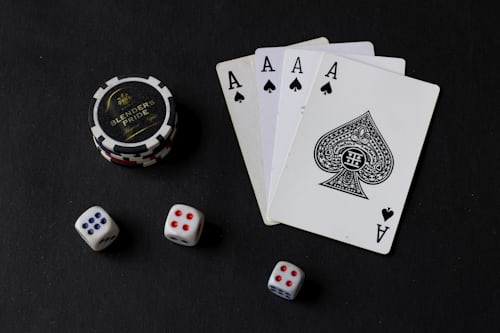
Nevertheless, players often focus on their perceptions of luck rather than the underlying mathematics. This focus can lead to the belief that luck is a quantifiable entity, depending on personal interpretations of their experiences at the tables. Players may have winning streaks that make them feel lucky, but these experiences are inherently tied to the unpredictable nature of chance rather than a measurable phenomenon. Thus, while luck feels tangible, quantifying it remains a challenge, as it exists primarily in the realm of subjective experience.
The Influence of Timing and Environment
Timing and environment can significantly influence perceptions of luck in casino games. Superstitions around timing, such as playing at specific hours or during certain lunar phases, often come into play for players looking to enhance their luck. For instance, some players believe that late-night sessions yield better results, which can lead them to associate their wins with the time they chose to gamble rather than the actual odds of the game. This subjective interpretation can obscure the line between luck and probability.
Environmental factors, such as the atmosphere of the casino, can also contribute to the players’ perception of luck. Bright lights, the sounds of coins and cheers, and even the presence of fellow players can evoke a sense of excitement and hope. This psychological boost can create an illusion of luck that impacts a player’s performance. The more engaged a player feels with their surroundings, the more likely they are to attribute their experiences to luck rather than the realities of the game mechanics.
Moreover, social factors cannot be ignored. When players group together, they often feed off each other’s energy and enthusiasm. This communal experience can amplify feelings of being lucky, particularly in a setting where everyone is celebrating wins. Thus, while luck as a concept may be difficult to quantify, its effects can be seen in the way players interact with the game and each other, ultimately shaping their gambling experiences.
Can Strategies Mitigate Luck’s Role?
Although luck plays a significant role in casino games, many players attempt to mitigate its influence through strategy. In skill-based games like blackjack or poker, players employ strategies based on probabilities to sway the odds in their favor. These strategies allow them to make informed decisions, which can create the illusion that they have a handle on their luck. For example, knowing when to hit or stand in blackjack can lead a player to believe they are manipulating luck, even though outcomes remain tied to chance.
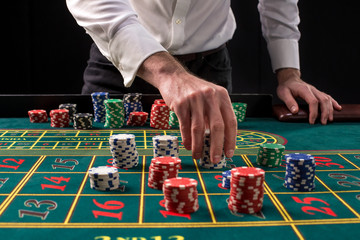
Training and practice can enhance a player’s understanding of the game’s probabilities, which, in turn, can impact their perception of luck. Players who immerse themselves in strategies and nuances of gameplay often report feeling less reliant on luck. It suggests that while luck is a pervasive force, skill and knowledge can create a more favorable gaming environment. Yet, the fundamental unpredictability of outcomes remains unchanged.
Furthermore, it’s worth noting that even with the best strategies, luck will always play a significant role in gambling. Players might know the odds, develop a rigorous application of strategies, and still experience losses due to factors beyond their control. Therefore, while strategies can refine a player’s approach and potentially increase wins, they cannot eliminate the randomness that is a key characteristic of all casino games, reinforcing the idea that luck remains an unpredictable factor.
Exploring the Concept of Luck Online
With the rise of online gaming, the concept of luck has taken on new dimensions. Players can experience the thrill of casino games from the comfort of their homes, yet the nature of online gambling can intensify the perception of luck. Digital interfaces often feature vibrant graphics and engaging sound effects that can heighten a player’s emotional investment. This online experience can lead participants to feel even luckier when they hit a winning combination, despite the underlying algorithms that determine the outcomes.
The role of randomness in online games is typically governed by Random Number Generators (RNGs). These systems ensure that the outcomes are entirely independent and unpredictable, mirroring the randomness found in physical casinos. However, players might not fully grasp the mathematical principles behind RNGs and instead rely on feelings of luck that arise during their gameplay, further emphasizing the subjective nature of luck in gambling.
Moreover, the anonymity offered by online casinos can contribute to players’ perceptions of luck. Without social cues, players may feel freer to engage in superstitions or personal rituals before playing, as their choices are less influenced by the presence of others. This solitary engagement emphasizes personal narratives around luck, making the experience uniquely individual. In this context, understanding how luck can be perceived and experienced becomes as crucial as understanding the mechanics of the games themselves.